
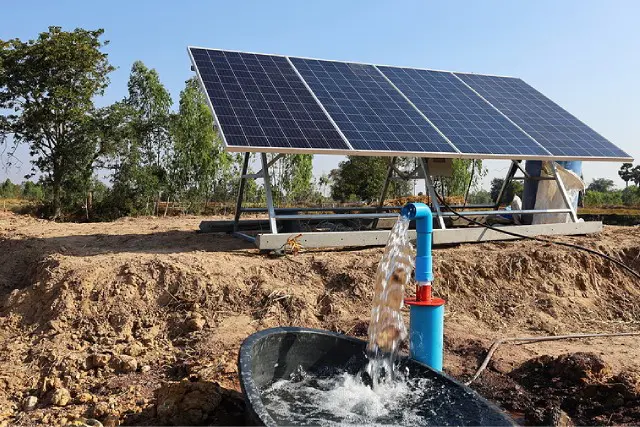
Solar Water Pumping Systems
How does a solar water pump work?
A solar water pump uses solar energy to drive the pump to extract water from a borewell . Here’s how it works:
- Solar panels: The process begins with the solar panels. The solar panels convert sunlight into direct current (DC) electricity that is sent to the VFD controller.
- VFD controller: The VFD controller is an electronic device that controls the speed of the motor by adjusting the frequency of the electrical power supplied to the motor. It receives the DC electricity from the solar panels and converts it to alternating current (AC) electricity, which is used to drive the motor. The VFD controller also monitors the system performance and can adjust the speed of the motor to optimize efficiency and protect against overloading or underloading.
- Motor: The motor is typically a three-phase AC motor that is designed to work with a VFD controller. The motor converts the electrical energy from the VFD controller into mechanical energy that drives the pump.
- Pump: The pump is responsible for moving the water from the source to the desired location. The pump can be a centrifugal pump or a positive displacement pump, depending on the specific application and water requirements.
- Water delivery: Once the pump is activated, it moves water from the source to the desired location through pipes. The VFD controller monitors the system performance and adjusts the speed of the motor to ensure optimal performance and efficiency.